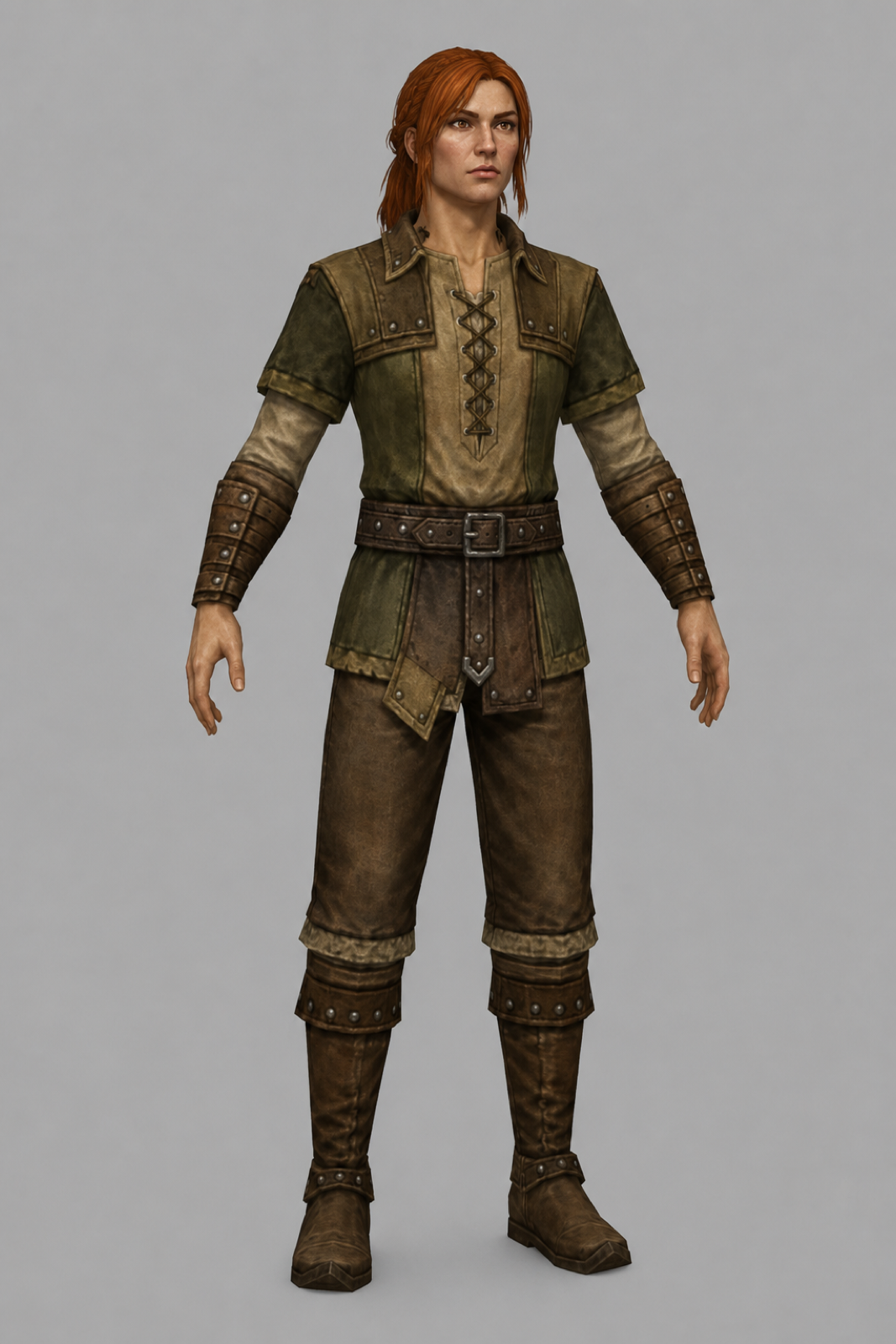
PERSONAE · THE VALE
Sera of the Last Loaf
aka Bread-Sera, the Winter Walker
The Vale's best-loved Fire-Tale hero: a baker's widow who, in the Great Famine's killing winter, walked bread over the drifted passes to steadings the Vale had already written off — trip after trip, all winter, until the thaw came and she didn't come back with it. No sword, no gift, no god: just an oven, a sled, and a refusal to stop. The last loaf left on a sill bears her name in half the Vale's tellings.
The tale keeps her small on purpose. Sera was nobody: a baker's widow in the grain country, too old for the work by the telling, with an oven her husband built and a debt on it. When the Great Famine's worst winter shut the passes, the sensible people counted who could be fed and drew the line, the way sensible people do. The tale is exact about this and no teller softens it: the line was drawn, and the steadings past it were spoken of in the past tense by folk still sharing a market square with them. Sera baked what there was — bark-flour, bean-meal, the sweepings the factors let go because no one with money would touch them — loaded a hand-sled, and walked past the line. The first trip was supposed to be the only one. It was fourteen miles of drifted trail to the first dead-reckoned steading, and she found them alive, and out of everything, and burning the byre boards. So she went back, and baked, and went out again. All the strands agree on the shape of that winter: trip after trip, different trails, the sled heavier than she was; the wolf strand and the ice-bridge strand and the strand about the toll-post that tried to weigh her bread and got the whole of her opinion. Some tellings give her a companion — a dog, or a deserter off the Rampart roads who never gives his name and steadies the sled on the bad miles, and firesides argue about him happily. All agree the steadings past the line came through to the thaw, every one, and that the factors' line did not survive the shame of it. And all agree how it ends, because a Fire-Tale does not lie about cost: the last trip of the winter, in the first false-spring melt, she went out with the sled and reached the steading and set the bread on the table — and sat down by their fire, and was done. Carried home the whole fourteen miles hand to hand, they say, and there were more hands on the road than there was road. What is fact and what is oven-warm invention nobody can say now, and the Vale has voted that it does not care. What stands is the custom: in half the Vale, the heel of the loaf left on the sill at night is 'Sera's piece' — set out for whoever is still walking in the dark with too far to go. The other half says the sill-loaf was always the Good Neighbor's due, and keeps it just the same, and the two tellings share the same sills without a quarrel. Hers is the tale mothers reach for first, because it needs no dragon: only a winter, a line drawn by sensible people, and one stubborn old woman who kept walking past it. And when the pot is thin and the night is long, a Vale fire will still say it the way the tale ends: 'Eat. Sera walked further with less.'
KIND
mortal
SPECIES
Human
ROLE
Fire-Tale hero (deceased) — the famine-winter bread-walker
FATE
Died at the end of her last winter run, at the table she had just fed, in the first false-spring melt; carried home hand to hand. Long dead — she exists in the present Vale as tale, custom, and name.
Connected
Type Fields
All Relationships (5)
references
- ←The Fire-Tales — Sera of the Last Loaf is the best-loved tale on the shelf — the hero who needed no sword, only a winter and a refusal to stop.
- ←Tarrow the Lantern — The strand the Vale likes best: Tarrow's lantern was first lit at Sera's famine-oven and has been carried fire to fire ever since. He neither confirms it nor laughs at it.
participated_in
- →The Ash Famine — Sera's winter IS the Great Famine's worst — she walked bread past the factors' line, trip after trip, until the thaw; the line did not survive the shame of it.
aligned_with
- →The Good Neighbor — Half the Vale calls the sill-loaf 'Sera's piece,' the other half the Good Neighbor's due — two tellings sharing the same sills without a quarrel, and no household deciding.
documents
- ←Sera of the Last Loaf, Told Proper — The chapbook is her tale told proper — the fire's own version, with the room's corrections left in.
This world ships in Valenfeld. Wishlist on Steam →