THE COMPENDIUM
Concepts
73 entries
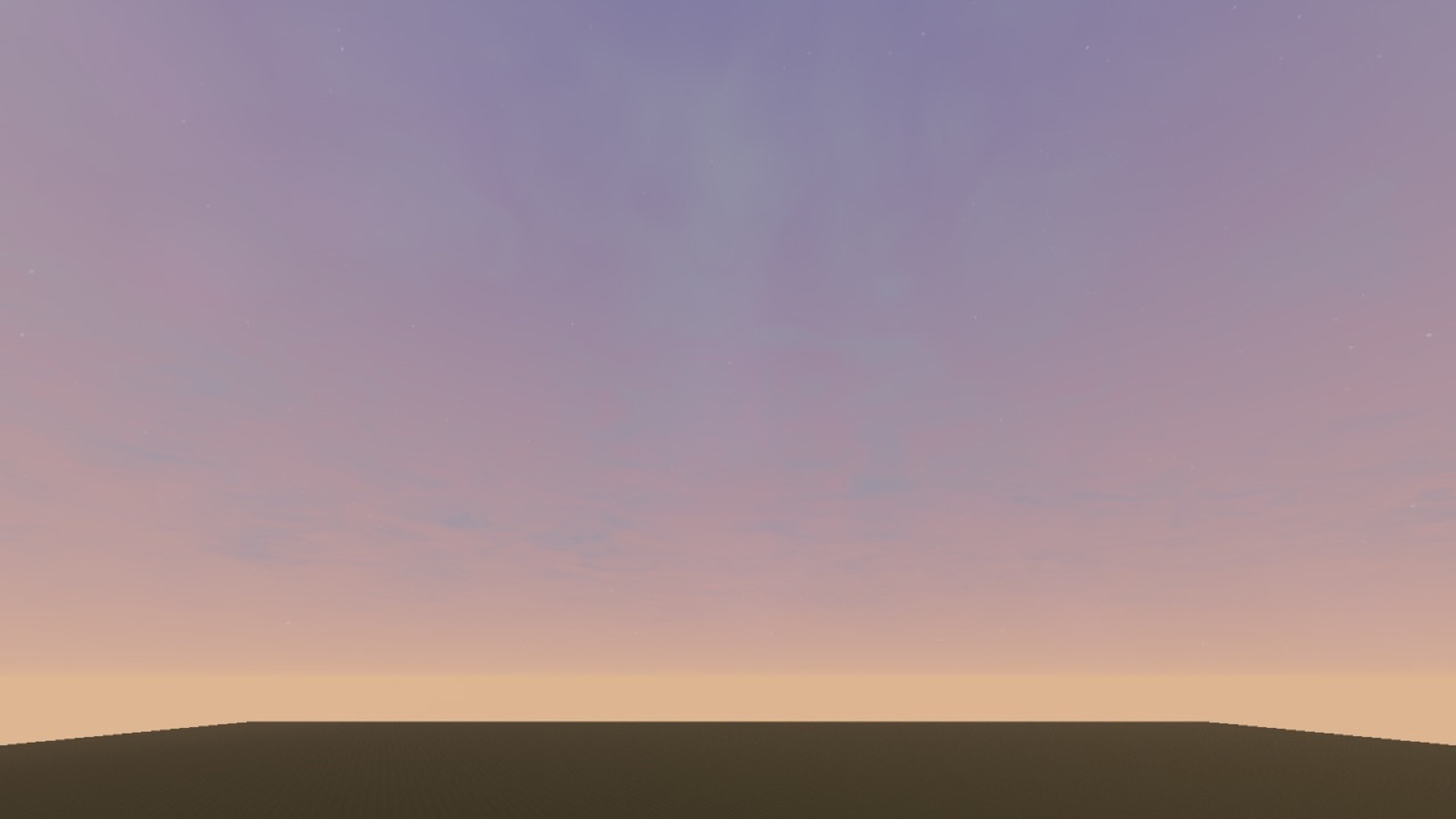
Asheni Architecture
Asheni buildings are made from what fire has already changed — fired brick, slag-glass, ash-render, obsidian vein. Dark, massive, grounded. The fire inside is never incidental; it is the reason the building exists. The smoke-path is sacred space. The ancestor niches are in the walls. The threshold is the most deliberate moment. Everything reads as permanent, inhabited, and older than you.
Asheni Wayfinding
The Bonesung practice of reading ancestor-poles, mesa positions, and herd-traces to navigate the wastes — a knowledge system the settled call superstition and the wastes confirm lethal to ignore.
Athra, the Endless Design
The Vyr's god of making — artifice, measure, and design, the conviction that the world is a made thing that can be understood, improved, and remade. Invention is its worship; a finished device is a completed prayer. Alive, faceless, and implicated: it still hands designs down to a few, and the plan to erase the lower world is one of them.
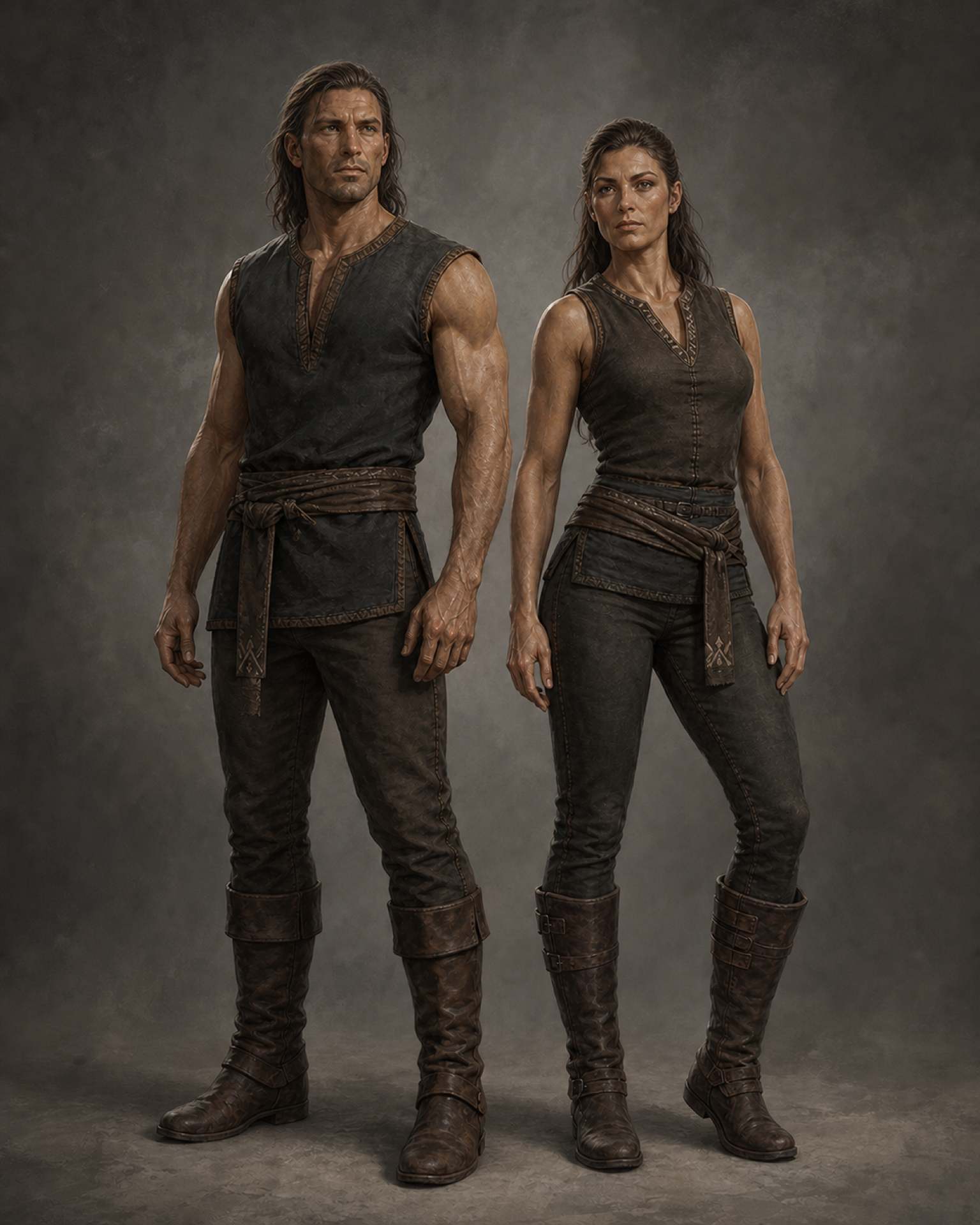
Humankind
The latecomers — settlers, sellswords, and ledger-clerks drawn to the Vale by the dead Imperium's silver, plus the hard river-folk of the Northern Reach. Rootless, adaptable, and quietly lucky.
Old Harrow, Turner of the Year
The farm-belt's god of the turned year — sowing, the green coming up, and the rot that feeds the next sowing. You worship him with a spade, not a prayer: tend his ground and he tends you back. He is losing the Lean Years, and the old folk say he knows it.
Old Work
The trade word for salvage out of the dead empire's works — bronze cast and alloyed in ways no living smith can match. Raw scrap sells by weight; an intact working is worth a season's wage; the rarest pieces are named things nobody can price. It is the one trade that lets the frontier eat.
Political Geography — Racial Tensions by Region, City, and Faction
How the inter-racial sentiment matrix and the Sundering's asymmetric knowledge distribution express themselves across the Vale's regions, cities, and factions. The Vyr's Cult controls the story the Vale tells about itself; every political structure rests on that concealment remaining intact.
Racial Sentiments — The Sundering's Social Legacy
How the seven peoples feel toward one another, shaped by the Sundering and its centuries of aftermath. The Sundering did not create racial tension — it crystallized existing relations into the specific shape they now hold, and layered them with grief, guilt, and knowledge distributed unevenly.
Relic-Reading
The Far College's signature craft: reading a sealed Old Work mechanism by feel and instrument until it opens safe in your hands instead of in your face. Mastered, it is the only known road to handling the Wright's Shard itself.
Silt Coin
An informal currency of punched and stamped clay discs used by the Silt Hands for internal accounts, traded at a discount by anyone who needs to say nothing about where they got it.
The Age of Man
The current age — the age that began when the gods fell silent after the Sundering and mortal hands inherited the ruined world. Not named because humans rule, but because the gods have stopped and mortals now decide everything. We are in its late-middle: past the high-water, before the final unmaking.
The Amber Sap
The crystallizing resin that seeps from the Rootbound Hollow's deepest galleries — hoarded by the wake-keepers as a sacred last-gift, drunk by the Sap-Drinkers to stay warm, lucid, and human a little longer.
The Ash-Return
The Bonesung-of-the-Vale burial custom in which the dead are returned to the ash and their names spoken only by the gravesinger until released.
The Asheni
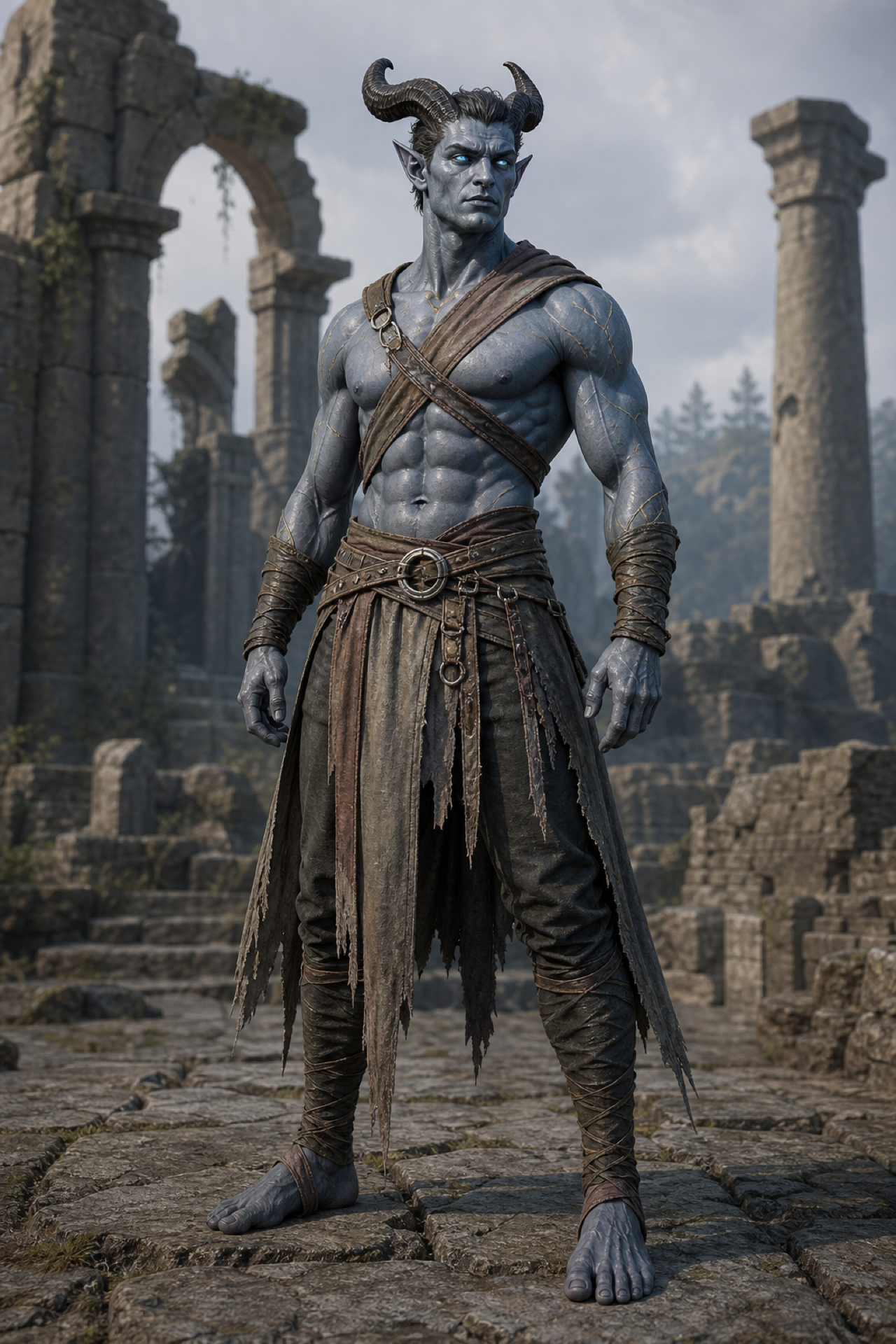
The grey-skinned, ember-eyed old blood of the Vale and the ash — kin to the fallen Vallen Imperium and to the wandering Bonesung clans. The Sundering is written into them: ash in the skin, the wound in the marrow.
The Barrow Prophecy
The Asheni prophecy that the relic must stay sealed until the one named comes to bear or break it.
The Binding-Song
The Sealed Choir's sacred craft: iron-throated hymns sung over the actual work of closing an ending — the latch thrown, the seal set, the eyes shut — that mark the moment sacred while the rite itself does the real work.
The Birth of the Races
The seven peoples of the world did not all arrive the same way. Six emerged from the Rebirth cycle at different points in its descent — each a crystallization of the elements at a specific transition. The seventh, humankind, was not born. It was fashioned from mud by Vallen the Wright, for labor, and given just enough of his breath to be alive.
The Breath in the Mud
A mocked fringe hope — that the wheel of Ruin can be broken, and that humankind is the crack. Every other people crystallized from an element and rides the cycle's turn; humankind alone was fashioned from mud and given Vallen's own breath — no elemental nature to bind it to a transition, and a spark of the very Fire the stuck cycle is starving for. The Vyr call the mud-folk soulless and lesser. The heresy answers: the elementless are the one thing the wheel cannot claim. Held by almost no one, laughed at by nearly everyone, and unproven — disputed like the rest.
The Cairn Road
The single cart-track climbing from the Vale's northern margin to Pinewatch, crossing the Marrowgorge at the Spanstone — the only maintained way into the Rampart Foothills, beyond which only cairns and footpaths guide the traveller.
The Caldera Question
The mystery at the Emberwaste's heart: what did the Vallen Imperium find in the Emberthrone's caldera that made them build the Cindervault, and then seal it from the outside?
The Cult of the Living Vallen
Humankind's inherited faith in Vallen the Wright — the maker who fashioned them and witnessed their oaths. He is dead, broken at the Sundering, and most who keep the faith know it and keep it anyway: shrines tended, contracts sealed, the dead buried, oaths sworn 'by the Wright' out of four centuries of habit. A stubborn minority insist he never died at all.
The Cycle of Rebirth
A facet of the Old Reckonings — the generative half of the dual wheel: Aether begets Fire, Fire begets Earth, Earth begets Water, Water begets Air, and Air begets Aether again. The doctrine held that when this cycle runs cleanly creation renews itself, and that it has not run cleanly since the Sundering. One dead college's scheme, disputed like the rest.
The Cycle of Ruin
A facet of the Old Reckonings: the claim that war recurs at every scale — from the Primal Discord that soured the world, through god-war, empire-war, faction-war, down to a man killing his neighbor over a dry well. Each the same argument at a different size. The lingering dead are held up as the proof — the past does not end, it only scales down. One doctrine's grim pattern, disputed like the rest.
The Deepening
The plain fact that the easy Old Work is gone. The near-town ruins were stripped generations back; the good bronze that's left lies deeper, farther out, and in worse-kept places than it used to. Every year the trade has to go further down and further out to eat — which is exactly what pulls the bold to the edges of the map.
The Drowned Rite
The pre-Imperial sea-burial custom of the Narrows folk — the dead interred above the tide in salt so the ocean could find them later, and the shrines sunk into the water on purpose so the gods could hear them better.
The Drowned Road
The Mirrenmere custom of navigating by tidal timing — reading the bare-and-flood cycle of the Sunken Stair Road as a language of safe windows and lethal floods.
The Duality
A facet of the Old Reckonings: the claimed axis of the cosmos — the Heavens above, the Underworld below, the living world suspended between. Making and Unmaking as two faces of one turning, not opposites at war. The doctrine's founding shape, and disputed like the rest of it.
The Dusk-Singing Wind
The constant wind of the Eastern Crags that, at dusk, produces a tonal hum from the mesas' wind-carved geometry — a sound the Bonesung read as the unmarked dead speaking, and the Far College reads as ordinary wind-carved acoustics, nothing more.
The Elder Age
The long age before the Imperium, when the god Vallen walked unbroken and the Korl and Stoneborn quarried the Rampart's bones — the stratum the Imperium was built on top of and the reason the world feels older than its empire.
The Ember-Faith
The Asheni's own hearth-keeping faith — the banked coal that outlives the flame. A house lives as long as its fire never goes wholly out; keeping the ember is keeping the dead, the line, and the household warm through the Lean Years. Local, priestless, tended by whoever tends the fire.
The Fair Copy
The Menders' plan, four centuries in the making: to erase the spoiled lower world and set creation down again, done right this time. Rooted in Athra's completion-drive and Vyr guilt over the god they broke. Its method is a successor creation — and the built monsters eating the frontier are its reject pile.
The Fire-Tales
The Vale's shared shelf of hero-stories — told over shared fires, never written down straight, and owned by everyone. Its heroes are not conquerors: they are the ones who went into the dark, or through the winter, or up past the last cairn, and came back — or didn't, but the road they opened stayed open. Every child knows a dozen; every teller changes them; the fire is always warmer when one ends.
The Five Elements
A facet of the Old Reckonings — the demoted scholars' doctrine that the cosmos is made of five elements in a hierarchy: Aether highest, then Air and Fire, then Water and Earth. Each was said to generate the next in the Rebirth cycle and to be wounded into the next in the Ruin cycle. Elegant, total, and disputed — one dead college's scheme, not the floor of the world.
The Good Neighbor
The small god of the hearth and the threshold — snug rooms, kept doors, and the little comforts that come to a house that keeps its manners. Milk on the step, a chair left empty, and the luck stays. Turn a traveler away, and folk say it's why the luck left.
The Great Slack
The rare spring tidal event when flood and ebb stack twice over and the Narrows channel drops to bare rock for a single cold hour, opening the Wrack-Maw and every deep sink that is normally never fully exposed.
The Greenwake Rite
The Greenwake's signature craft: easing an echo-touched thing back into the living cycle so it fades by growth rather than by sealing or silence.
The Grey Walker
The road-god of every traveler — waymarks, fords, and the safe way through. His shrines are the cairns at the crossings, and the prayer is simply to add a stone as you pass. Every explorer in the Vale is his, and most never learn the name.
The Hessk
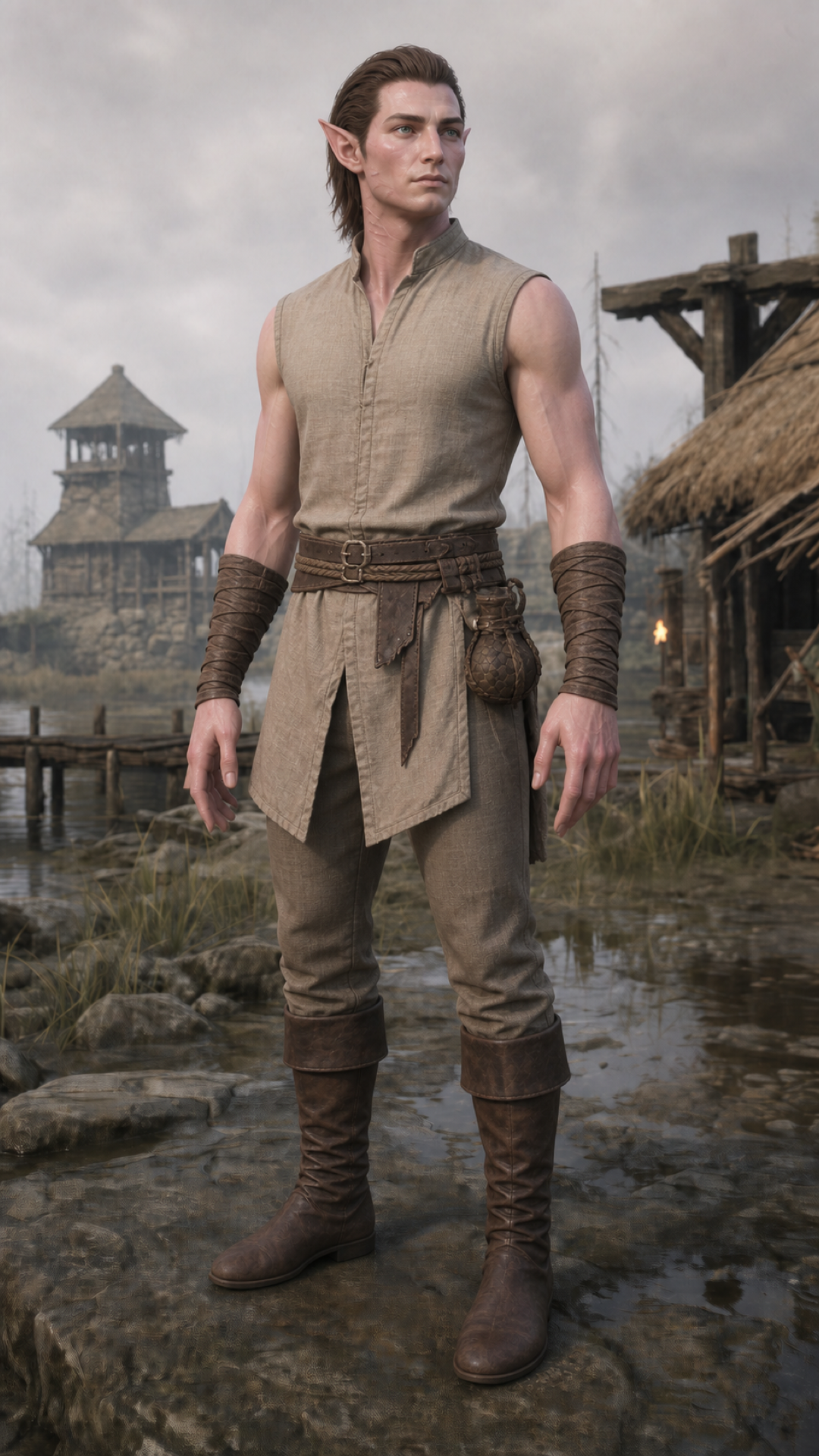
An ancient elven lineage that moved into the waters and caverns below the drowned valley eons ago, until the deep became as natural to them as the open air. The Silt Hands and the Divers are mostly Hessk crews; the drowned shrines hold no terror for a people who can sit on the bottom and wait.
The Karth Crossing
The singular fact of the Karth gorge that makes Karth Bridge matter: the gorge runs unfordable for thirty miles except at one timber span, and whoever holds that span holds the north.
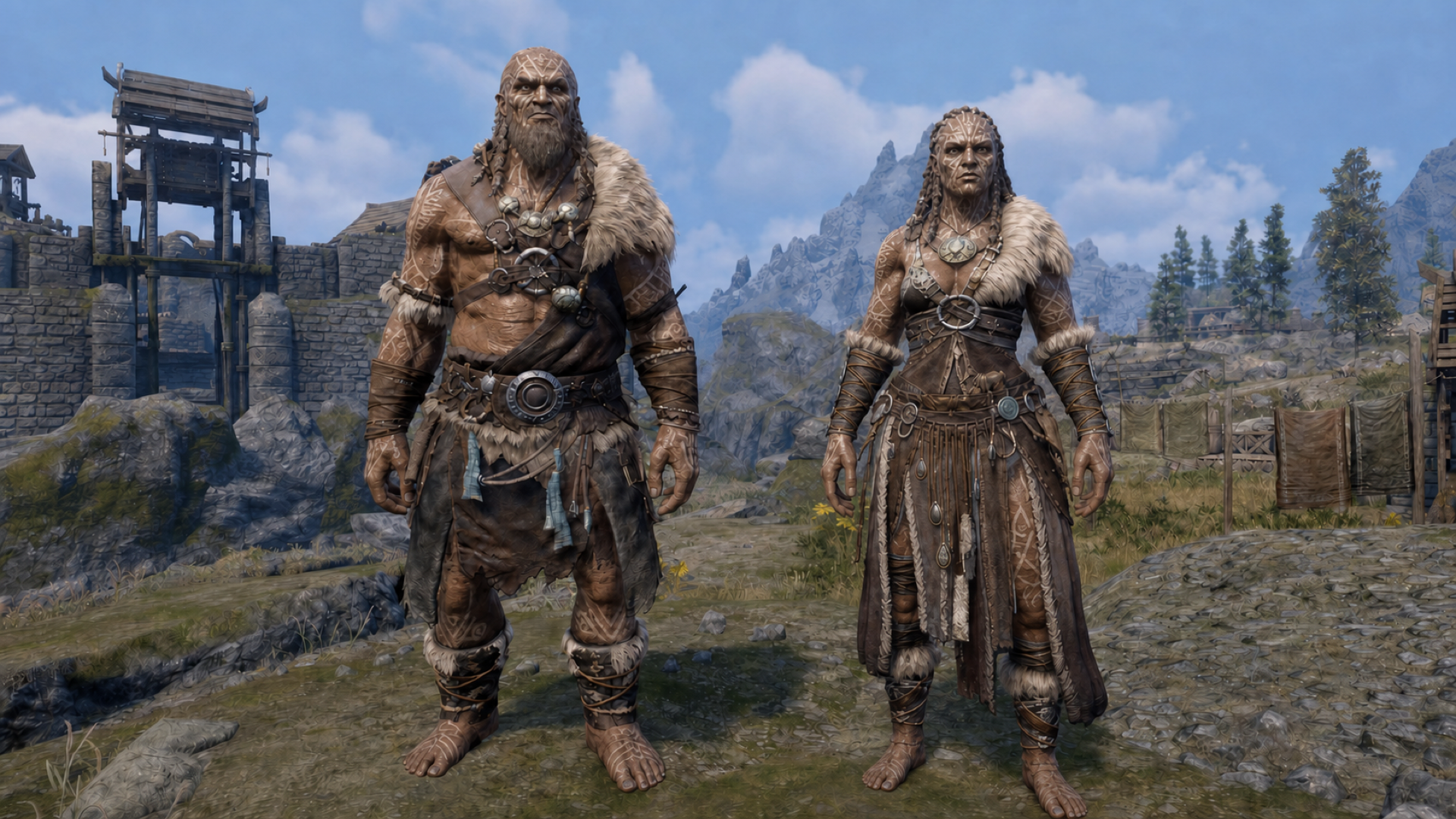
The Korl
The big folk of the high passes — a head and shoulders over any settled man, slab-muscled and frost-skinned, older stock than the Imperium that tried to wall them out. Cold doesn't touch them; fine spellwork mostly defeats them.
The Korl Ancestor-Keeping
A practice, not a god: the Korl hold their family dead as small, near intercessors — a grandfather worth asking before a crossing, a mother who still minds the hold. Winter is when you square accounts with them, and the frontier humans who married into the high passes have quietly picked it up.
The Korl Grave-Right
The Korl custom by which a warrior's weapons are buried with them and the barrow-sealed — no grave-goods leave the tomb without the living kin's blessing, and to take them is to inherit the dead's quarrel.
The Lean Years
What the lower world calls the slow collapse it actually lives in — failing crops, drowned mines, dying trades, raiders off the cold passes, and no word from the capital in living memory. Nobody down here knows why it keeps getting worse; most have stopped asking and started just trying to get through the winter.
The Light
The plain, priestless name humankind gives to what a paladin or cleric actually feels when a wound closes, an oath holds, or the restless dead turn back to stillness — not a god, not a doctrine, just a warmth that answers a kept promise and a steady hand. Almost no one who invokes it could say where it comes from. The handful who ask suspect it is the last of a dead god's fire, spending itself down.
The Listening to the Mountain
The Ashwalker practice of reading the Emberthrone's ash-fall, vent-sound, and smoke-column patterns as language — not worship, but a discipline of attention older than any faction.
The Lying Water
The heat-mirage phenomenon of the Southern Flats — the salt pan shimmers with the appearance of standing water that is never there, a perceptual trap that kills by leading the thirsty toward the illusion instead of the shade.
The Marrow-Oath
The Marrow Lances' binding contract-rite: swear it over coin and you are bound to the work — and the company will hunt anyone who breaks it.
The Meltward Doctrine
The Meltwardens' core belief: the cold wound under the Karth Deep, left alone, will melt correctly on its own; any intervention — seal, study, or wield — only wakes it worse and makes it last longer, extending the harm.
The Moot's Charter
The Highbridge Trade-Moot's answer to every power that wants a door in the free city without a claim on its stones: license them. A charter buys a foreign house a bench voice, a fixed tithe-rate, and standing to recruit and trade under the Moot's law inside the walls, nothing more, and it can be closed by the same two-thirds vote that unseats a High Reeve.
The Old Man Under the Mountain
The stone-god of the deep galleries — patience, weight, and the places that were meant to stay shut. You do not pray to him for anything. You knock, you leave the deepest seam alone, and you hope he keeps sleeping.
The Old Reckonings
An old scholars' cosmology — once taught as the truth of the world, now one disputed theory among many. It held that all things are made of five elements turning through a great wheel of ruin and rebirth. Elegant, total, and quietly abandoned by most who look at the actual world.
The Primal Discord
A facet of the Old Reckonings: the war before the gods swore — the primordial violence the world was fought out of. Creation, the doctrine held, was not made in peace but wrestled into being, and a deep unrest was left in the ground of things when the fighting stopped. One dead college's origin-myth, disputed like the rest.
The Quiet
The Finders' cant and code — a way of speaking, signing, and behaving that marks who's in the trade and what they owe, all without a word the guard could swear to.
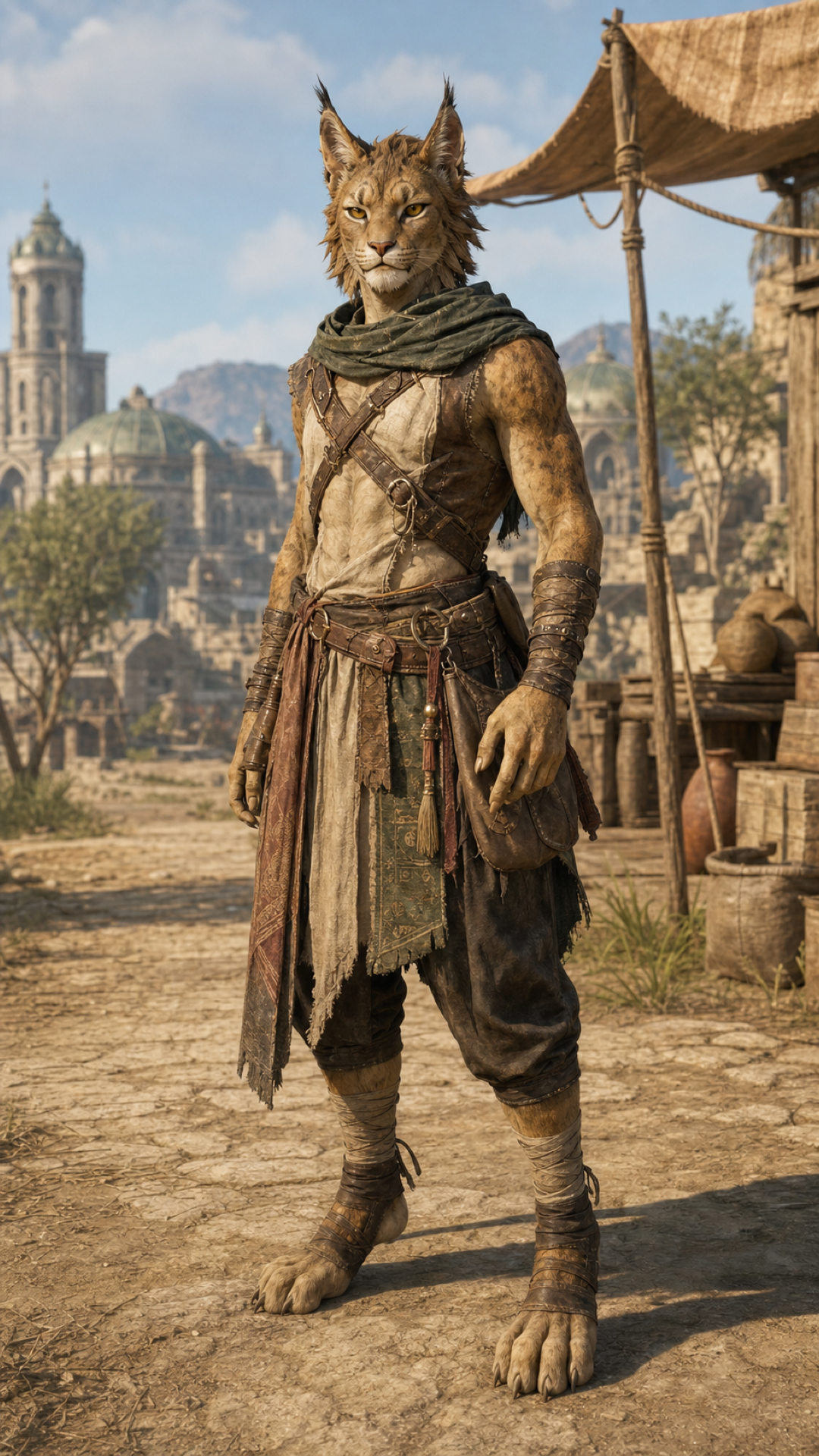
The Reshi
Tawny-furred, night-eyed caravan folk who came up the southern roads with the salt and the silk and never quite left. They keep the long roads and the quiet trade, and see in the dark by birth.
The Shared Fire
The road-custom that binds strangers who pass a night at one fire: while the ash is warm you are fire-mates — what's in the pot is halved, watches are traded, and no hand is raised. It is the hearth's law carried out into the dark, and most of the fellowship the Vale ever knows begins as two travelers deciding one fire is safer than two.
The Speaking Wind
The dusk-wind through the Speaking Stones and the Wind-Cut Pass saddle that makes an almost-word the tribes read as a warning and the Korl read as the mountain talking — the Northern Rampart's signature dread-signal.
The Stillwater Stance
The Stillwater Order's empty-handed discipline: a martial art and a meditation in one, by which a monk empties every want in themselves that a haunting could seize.
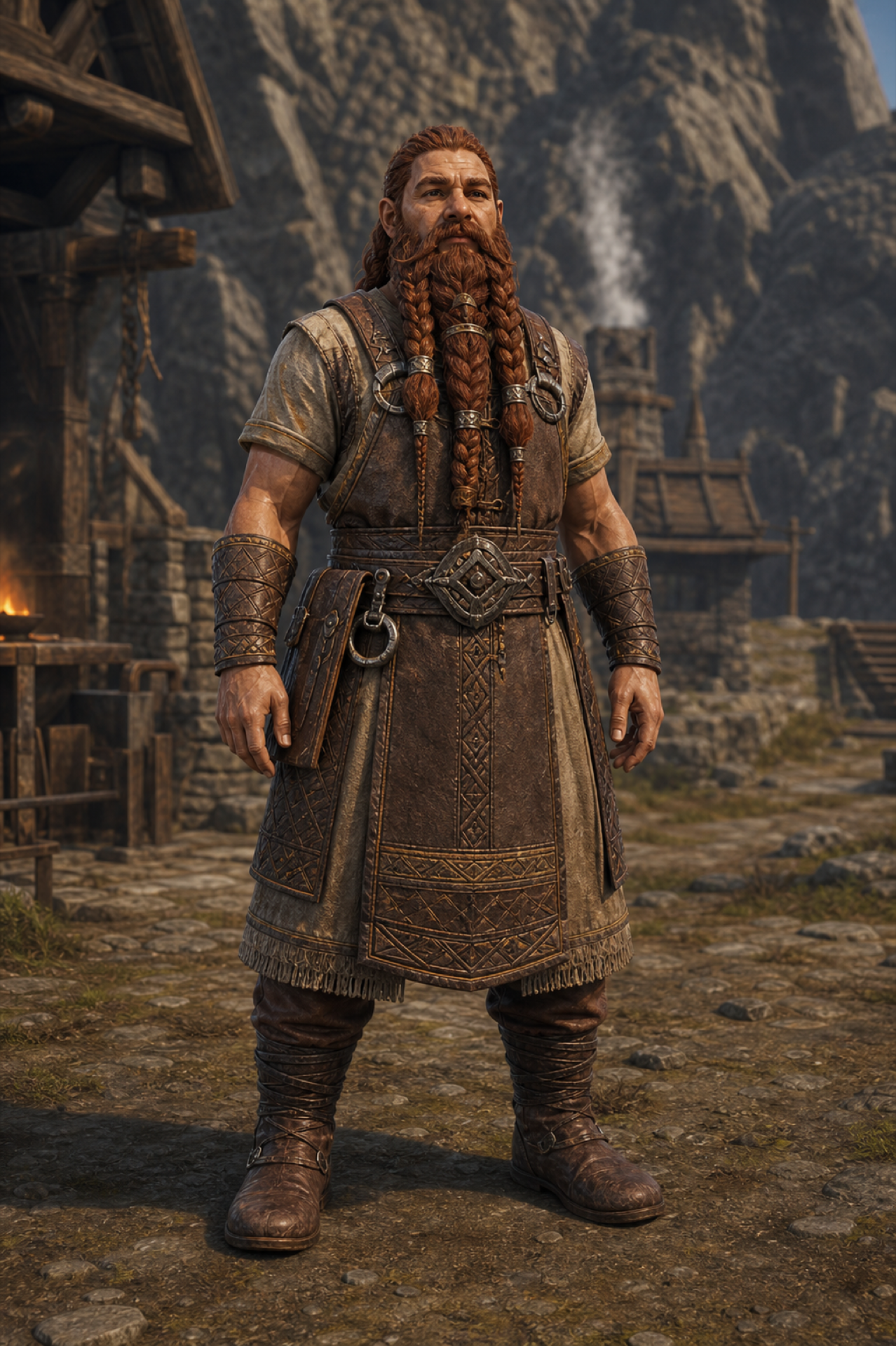
The Stoneborn
Short, broad, deep-voiced folk of the Northern Rampart who quarry the bones of the dead Imperium and the deep stone the Karth swallowed. They trust worked metal over any spell — whatever quickens lowland spellcraft finds no purchase in granite, and none in them.
The Sundering
The founding catastrophe, some four centuries gone — the day the world's making faltered and never recovered. Every creed agrees the god broke; none agree why. The true cause is buried under the sky, and almost no one alive has climbed to it.
The Sworn Gods
The fallen human empire's formal, half-remembered pantheon — the gods the Vallen Imperium swore its oaths by. Vallen the Wright, who made humankind, is dead. The Lady of the Long Water keeps her silence. The Last Guest works on. They are not the world's only gods; they are one people's, and that people is fading.
The Tamed Heart
The Vale was the dead Imperium's last frontier march: walked, roaded, and garrisoned for four centuries even after its god broke at Caer Vallen. Nothing past it got the same hand. The plain, diegetic truth behind the world's shape: danger rises with distance from the Vale because the Vale is the one shore anyone ever finished taming, and the shores beyond it were cut loose the hour the order to hold them stopped coming.
The Unclosed
The dead that linger because an ending was left open — a body never buried, a debt never settled, a door never latched, eyes never shut. Folk hauntings, plain and grim: most fade when the thing is finally closed, and the ones that don't harden into wights that keep a grave the way the living keep a grudge.
The Vale Harvest
The farm belt that feeds the lower world — tilled fields, corrals and farmsteads ringing the green-country towns, with Valenfeld's flat river basin as its heart. Everyone eats off it, and everyone knows the Lean Years are eating at it.
The Vallen Imperium
The dead bronze empire the Vale was only the far eastern edge of — a continent-spanning theocracy sworn to the god Vallen, ruled from the Bronze Seat at Correth, that went hollow the hour its god broke. No word has crossed the Rampart from the capital in four hundred years.
The Vandahl Ranked Burial
House Vandahl's ancestral custom of interring its dead by bloodline rank — the highest goes deepest, the most powerful most sealed — which ensures that those who ring the longest are also the hardest to reach and the most likely to walk.
The Vandahl Succession Charter
House Vandahl's inheritance law, which passes house leadership to the eldest surviving bloodline holder with the consent of the Oathblades — a consent Indryn has not sought.
The Vyr
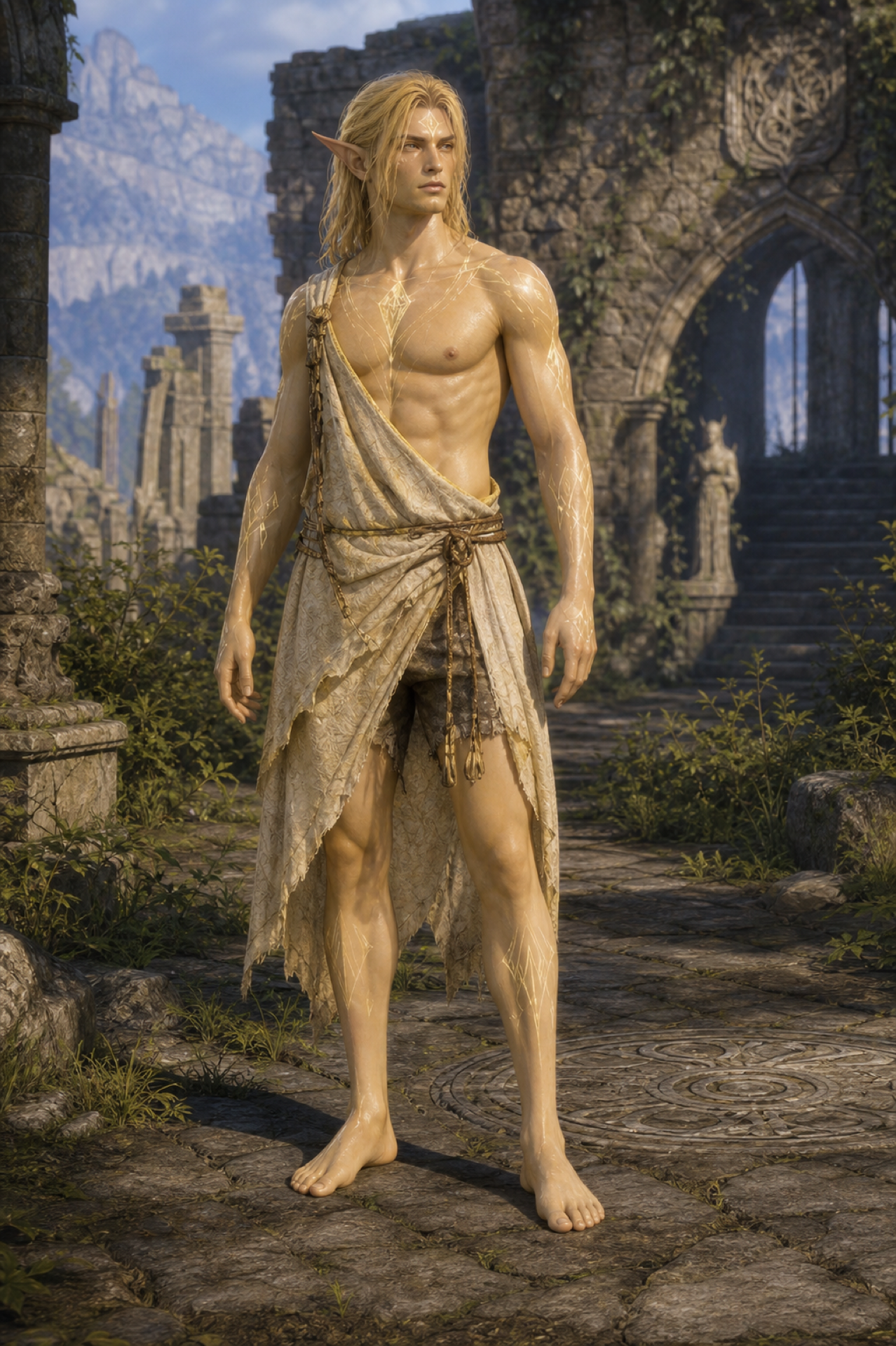
Tall, gold-skinned sky-folk born seeing the Design — Athra's gift, the sense that the world is a made thing to be measured and remade. The eldest blood withdrew to the sky-seat at Aelvyrenn after the Sundering they caused; the Vyr of the Vale are their faded, earthbound descendants. Brilliant, frail, certain they are right, and carrying a guilt the lower world has never been told.
The Vyr Schism
The quiet three-way split among the Vyr over what to do about the world they broke: the Menders, who pursue the Fair Copy and seed the built monsters below; the Still Court, who refuse the plan but refuse still harder to expose it; and the Downcome, the Vale-walking Vyr who mostly do not know it exists. It is not a war. It is three kinds of silence, and the silence is what keeps the plan alive.
The Wanderer
The one light in the night sky that does not keep to the wheel — a slow, pale star the old creeds call the Far House of the Sworn Gods. Star-watchers say it has run fat and low these last decades. Almost no one looks up long enough to care.
The Zeppelin Lines
Three coloured airship loops — Vermillion, Azure, and Amber — that circle the Vale on fixed rounds, docked and boarded in the flesh like any ferry.
Vandahl Ashlar
The dressed grey stone House Vandahl raises its CIVIC seats in — the keep, the moot-hall, the toll-gate — as distinct from the timber it houses its people in. Coursed ashlar with a fluted string-course and a single silvered lintel-knot over the door, inherited from old Imperium frame-and-course building. Where Vandahl timberwork spends the house's last wealth on the street it lives on, Vandahl ashlar spends it on the seat the house governs from: the stone that is meant to outlast the family.
Vandahl Timberwork
House Vandahl builds in blackened oak frame over pale lime-washed infill — tall gabled halls, carved bargeboards, and silver-leafed heraldic beams that outshine the treasury behind them. Every joint is pegged, never nailed; every lintel carries the house knot. It is the architecture of a house spending its last wealth on appearances, and it is genuinely beautiful for it.
Verdigris Lung
The wasting sickness that comes of working sealed, damp, unaired vaults too long — the green patina dust gets in the chest, and first it's a cough, then the shakes, then the mind goes soft. It's a property of the vault, not of what you carry out. Every old salvor has a touch of it, and the worst are past mending.