Personae · MORTAL
Chapter 120
Tarrow the Lantern
also called Old Tarrow, the Grey Walker's Dog, Lantern-Tarrow
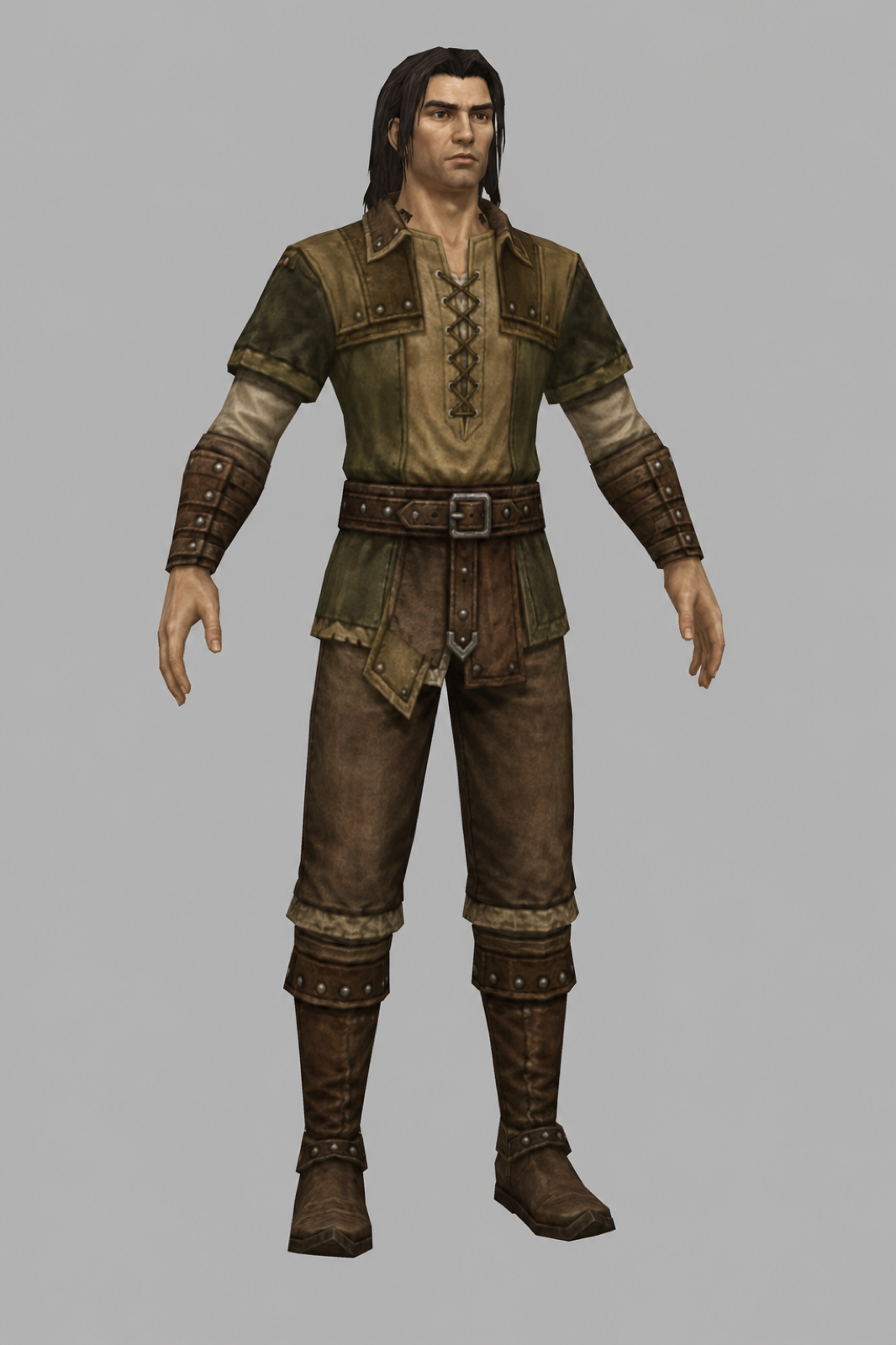
The stocky old campfire-crasher who turns up at shared fires all over the Vale, always just as the pot could stretch one more, hauling a dented lantern folk swear has never gone dark. He haggles a story for supper like a fishwife haggles fish, gives directions that are always right and never complete, and has apparently been 'an old man' since before anyone's grandmother was born. Nobody's pinned down what he is. He finds the question rude.
Every district describes him differently and swears he is theirs; that's the one thing nobody agrees on. What holds steady: squat and barrel-chested, sun-cured the color of old harness leather, a fringe of grey stubble he never quite shaves, missing the same eyetooth on the same side no matter who's telling it. He wears whatever the last three towns gave him: a patched drover's coat cinched with a belt of pot-hooks and twine, a scarf some grandmother knitted crooked, boots that have never matched. He leans on a bent iron toasting-fork worn smooth as a handle, because a walking stick is also a cooking tool if you're not precious about it. The lantern is the one constant: a dented tin drover's lamp, one pane cracked and mended with hide glue, that folk swear has never gone out, and he treats it less like a hero's prop and more like a squabbling old travel companion: grumbles at it, shakes it, tells it to hush.
He shoulders into the ring of your fire uninvited with a 'well, then,' complains about his knees before he's even sat down, and somehow by the time he's settled you can't remember not wanting him there. He keeps the Shared Fire's terms better than anyone living. He takes his half of the pot and no more, takes the middle watch nobody wants, and pays in the only coin he carries: a story, plus a fair bit of grumbling about the state of your fire-building. Get him fed and he will give you a Fire-Tale the way it actually happened, which is never the flattering version, and he tells the parts where it goes wrong so plainly that the dark feels closer. Then he lands the ending, and somehow the fire is warmer for it. Children pester him for the lantern. Dogs won't leave him alone. Toll-keepers count their coin twice after he's through.
Ask him the way to anywhere and he will tell you true (Tarrow's directions have never once been wrong) but never whole. 'Cairn line past the third ford. Don't camp in the pines, they're not yours to camp in. You'll know the door when you're brave enough to look at it.' Push for more and he goes deaf, or busy with a bootlace, or suddenly very interested in the fire. Push about himself and he gets worse: cheerfully, aggressively unhelpful. He's been old as long as anyone remembers; tellers' grandmothers described the same barrel-chested crank with the same dented lantern. Folk keep their theories to themselves around him: that the lantern is a job passed hand to hand down a long line of grey walkers; that he is just a stubborn old man with good boots and no sense, which is what he'll tell you, on the one day a year he answers straight. Once, at a fire on the Cairn Road, a young Writ clerk demanded his charter name for her ledger. He held the lantern up to his ear, listened like it had said something, and told her, 'It says I'm late, and so are you, and neither of us has time for a ledger.' Gone by morning, before the watch changed, same as always.
One strand of the tales (he will neither confirm it nor laugh at it) says the lantern was first lit at Sera's oven, the famine winter, and it is not his light at all: it is everyone's, and he is only the fool who agreed to carry it. The Vale likes that strand best. On a bad road, on a foul night, more than one traveler has sworn they steered by a small warm light ahead of them that no one was carrying when they reached it: only a ring of stones, and dry wood stacked, and the makings of a fire someone left for whoever came.